

Manufacturer · Made in India · Bulk & retail
Every plastic stick in your kitchen has a bamboo replacement. We make it.
We are a manufacturer, not a trader. Skewers, kulfi and lollipop sticks, stirrers, chopsticks and ear buds are cut, gauged, polished and packed on our own line in India — so the last carton of a container matches the first.
Bulk cartons for trade buyers, retail packs for kitchens and cafés, private label on request.
- ±0.1 mm
- diameter tolerance
- 25+
- stocked sizes
- <12%
- moisture at packing
- 6
- product categories
Made in India and dispatched pan-India — Maharashtra, Karnataka, Delhi NCR, Tamil Nadu, Telangana and West Bengal reach in two to four working days, with a GST invoice on every order.
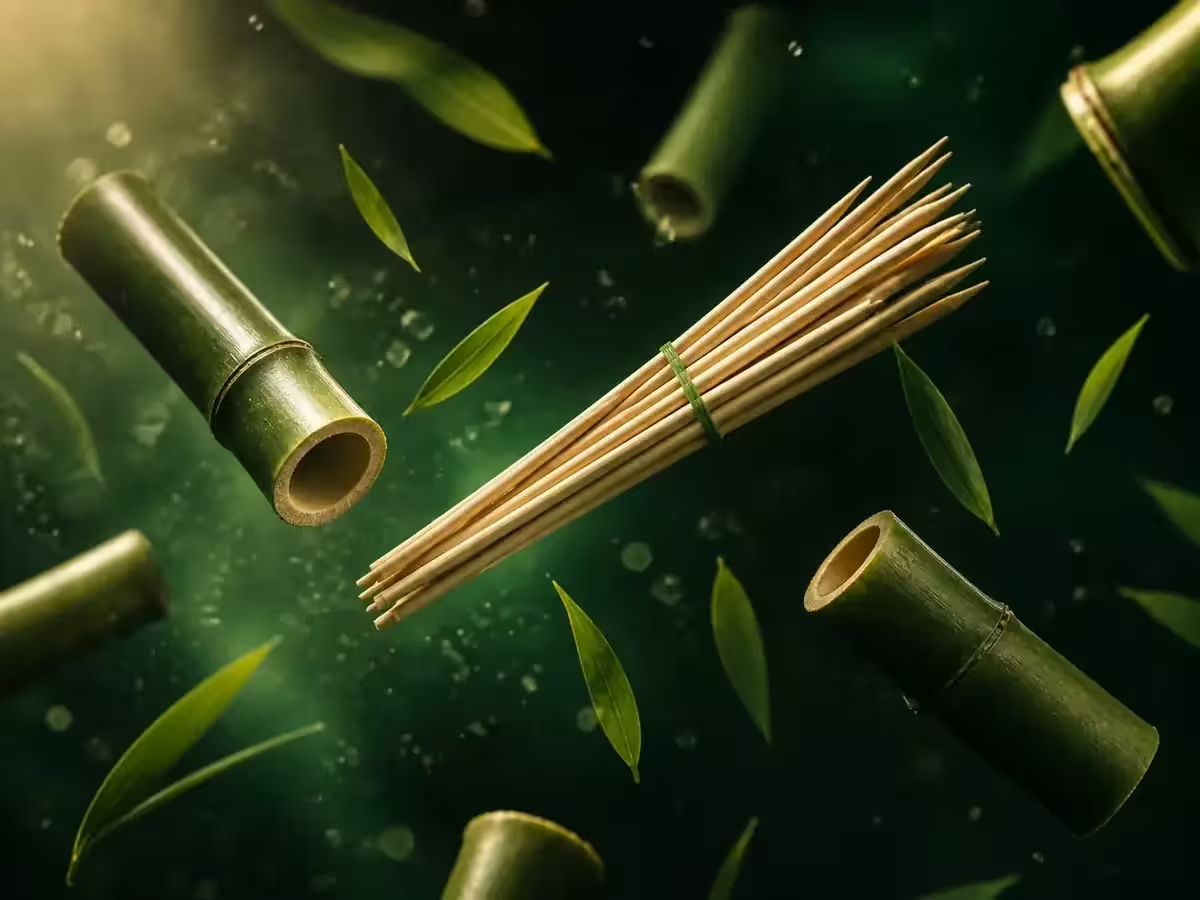
A culm cut at three to five years, when the fibre is at its densest.
The rhizome stays in the ground. Nothing is replanted, nothing is cleared.
What does GreenLife Bamboo make, and who buys it?
GreenLife Bamboo, a unit of Zayd Solutions, manufactures bamboo food-service disposables in India: round skewers from 2.5 mm to 6.0 mm, teppo, flag and paddle skewers, kulfi and lollipop sticks, coffee stirrers in four lengths, chopsticks and ear buds. Caterers, cloud kitchens, ice-cream and confectionery brands, FMCG packers and distributors buy in cartons; households and cafés buy retail packs. Because every stage from cross-cutting to packing runs on our own line, a buyer can specify a size once and repeat it order after order.
- Six categories, 25+ stocked sizes, published pack counts, MOQ and HSN codes.
- Quotes within one working day; samples posted before a first order.
- Wholesale from 10–20 cartons; export quoted per container, FOB or CIF.
- Private label printing on packs, sleeves and paddle heads.
- Ships from India to the Gulf, Europe, the UK and North America.
- Chopping boards, cutlery and straws on the roadmap.
What we make
Skewers to ear buds — pick a category to see diameters, lengths, pack counts and MOQ side by side.
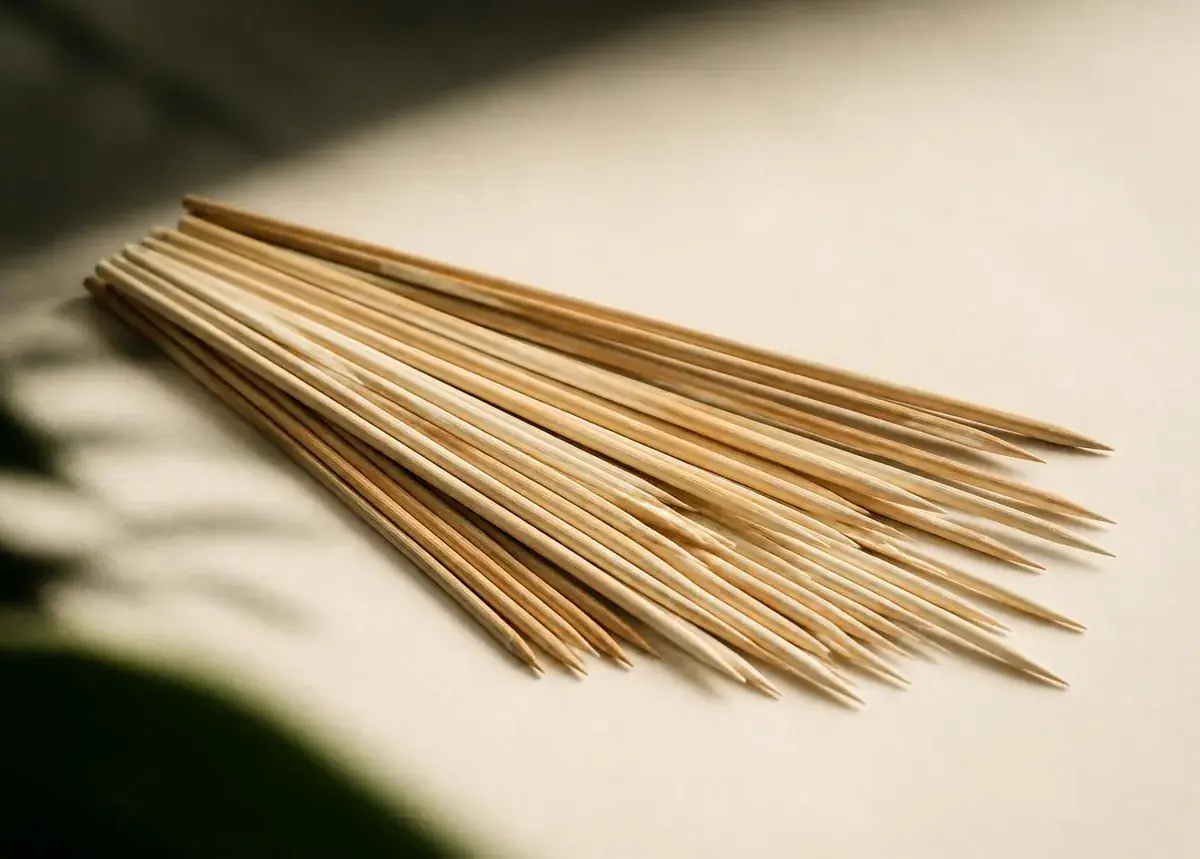
Bamboo Skewers
2.5–6.0 mm dia · 75–450 mm
Diameters: 2.5, 3.0, 3.5, 4.0, 5.0 and 6.0 mm.
View specs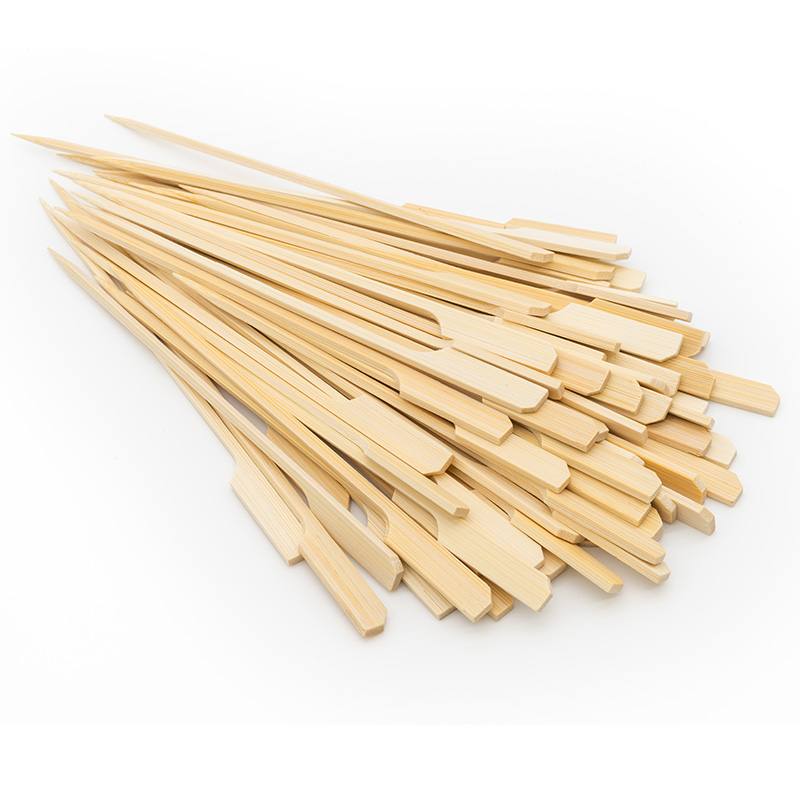
Teppo, Flag & Paddle Skewers
Flat, knotted and printed heads
Styles: teppo, flag, paddle, knot and loop head.
View specs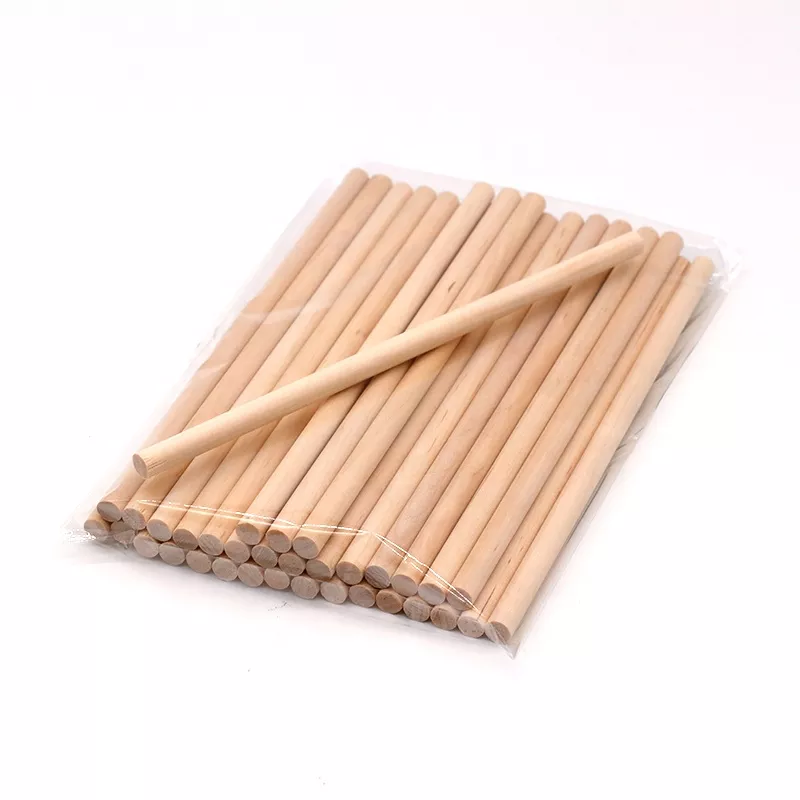
Kulfi & Lollipop Sticks
Flat and round frozen-dessert sticks
Flat sticks: 93 mm and 114 mm × 10 mm wide × 2 mm thick.
View specs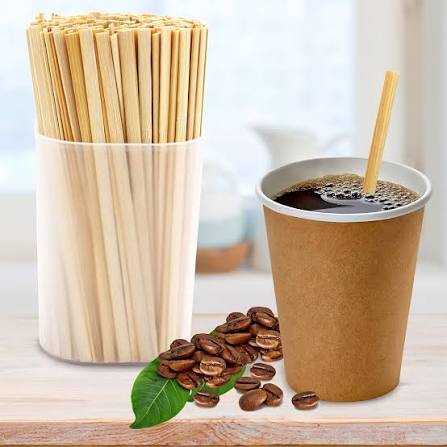
Coffee Stirrers
90 / 110 / 120 / 140 mm
Lengths: 90, 110, 120 and 140 mm.
View specs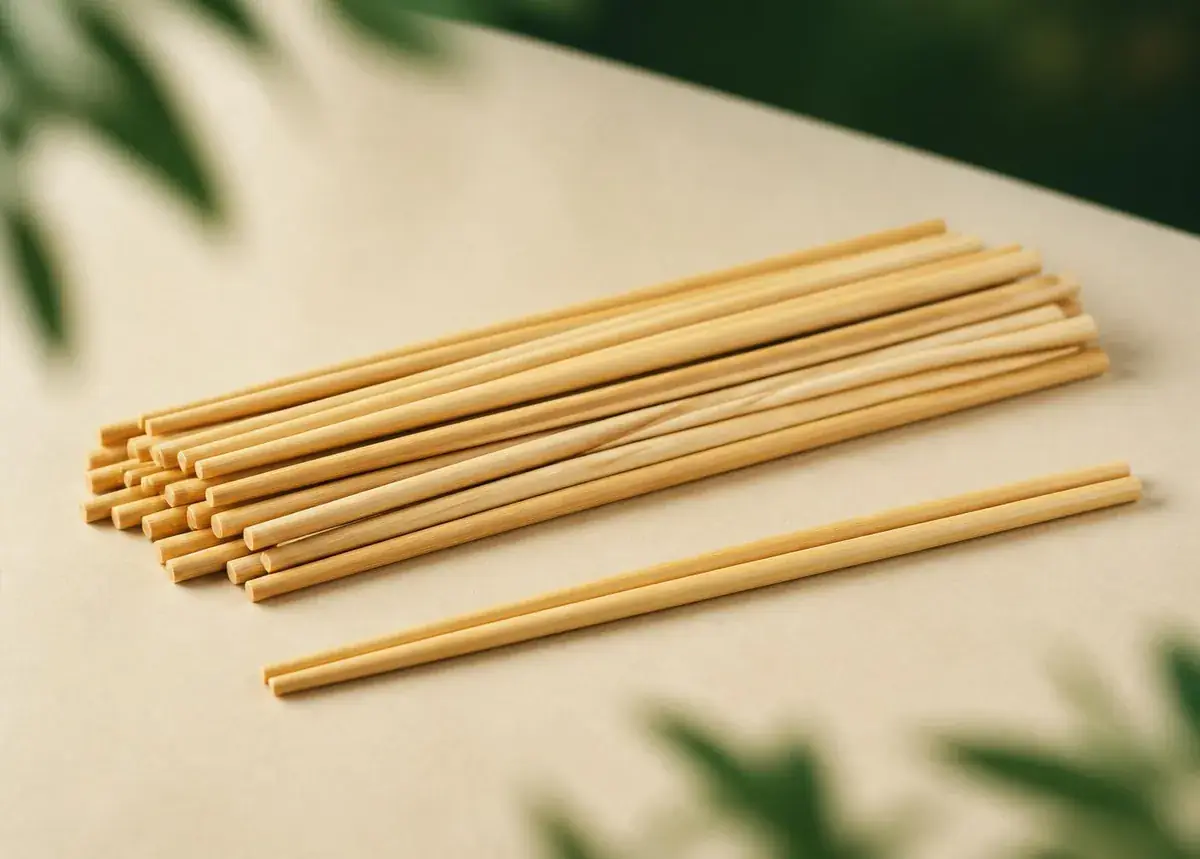
Bamboo Chopsticks
Round, twin and tensoge
Styles: round, twin (waribashi) and tensoge.
View specs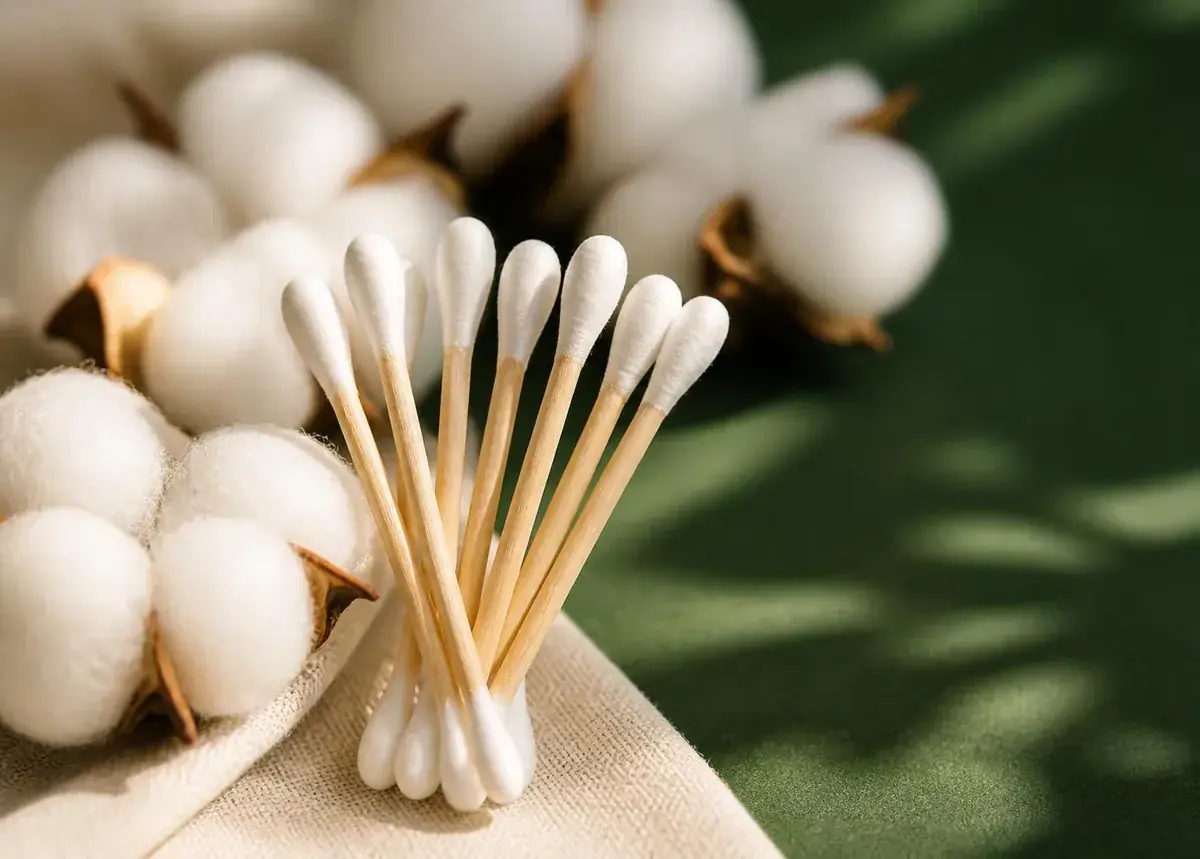
Bamboo Ear Buds
Plastic-free cotton buds
75 mm bamboo stem, 2.0 mm diameter.
View specs
Buying 50,000 pieces or more?
Carton pricing, MOQ, lead times and private-label printing. Tell us the product, quantity, destination and incoterm and we quote within one working day.
Request a bulk quoteBuying for your kitchen or café?
Single packs of skewers, kulfi sticks, stirrers, chopsticks and ear buds, shipped across India. GST invoice, UPI and cards, no minimum order.
Shop retail packsBuy a pack, not a container
The sizes kitchens, cafés and dessert counters reorder most. Same line, same tolerance, sold one pack at a time.
Where it starts
A grove in India, not a warehouse in between
Nothing here is bought in and re-boxed. The bamboo we cut is the bamboo you unpack.
From grove to carton
Four stages, each one a place where a stick can go wrong — and where we measure instead of assume.
Stage 01 · The grove
A grass, not a tree
Culms are cut at three to five years, when fibre density peaks. The rhizome stays in the ground, so the clump regrows without replanting and the grove keeps holding the soil.
3–5 yrs to maturity
Stage 02 · Cross-cut and split
Culm to strip
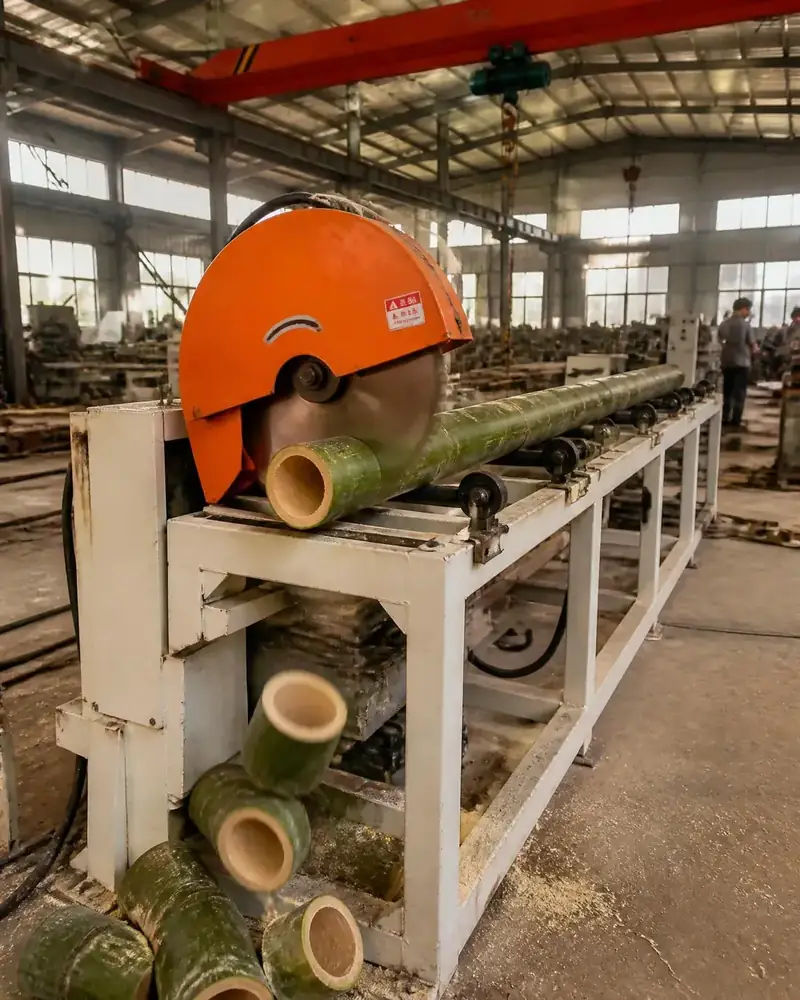
The culm is fed along roller rails into a circular saw-blade cross-cutting machine and sectioned to working length, then split radially into strips. Node sections are separated out and diverted to briquette feedstock rather than waste.
0 waste nodes go to briquettes
Stage 03 · Size set and polish
±0.1 mm across the batch
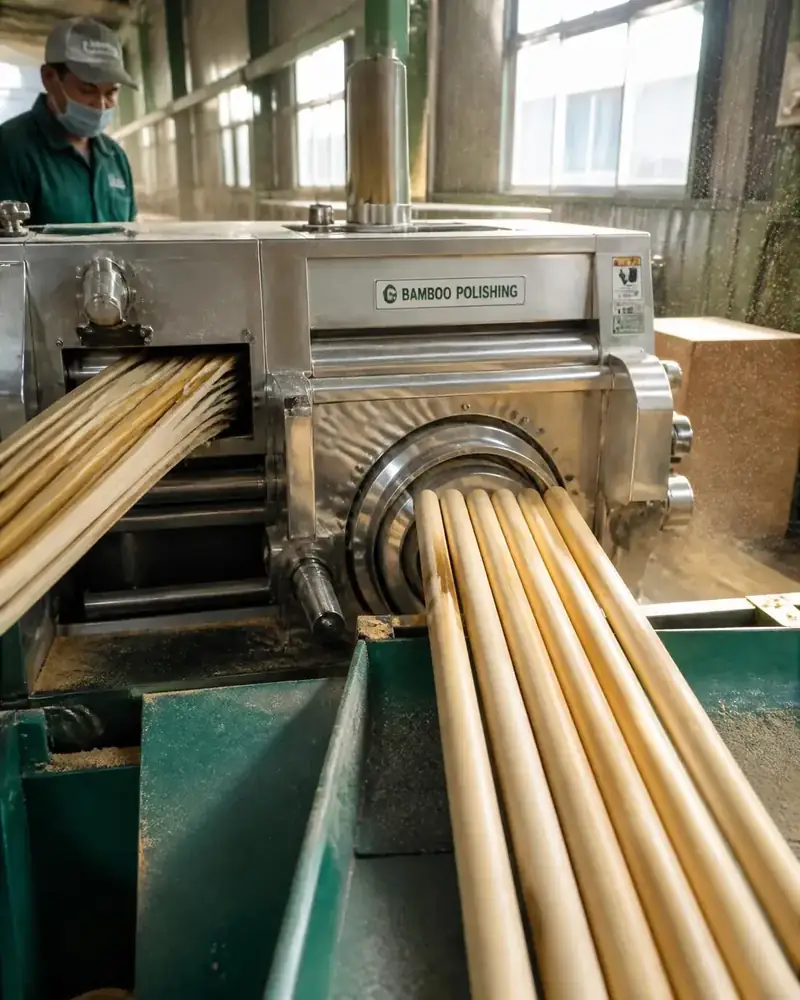
Strips run through the filament size-setting head, then tumble in a rotary polisher against abrasive media until the surface is hair-free. No bleach, no wax, no coating.
±0.1 mm diameter tolerance
Stage 04 · Dry, QC and pack
Below 12% moisture, counted and cartoned
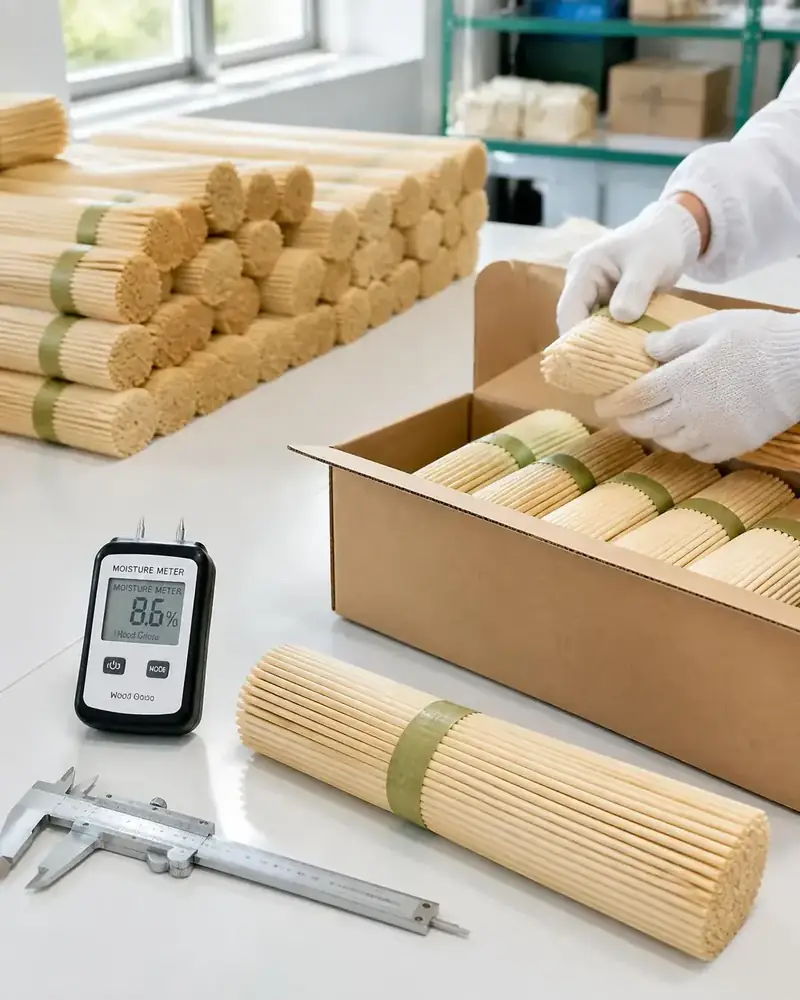
Kiln drying takes moisture under 12%. Every batch is checked with a meter and calipers for diameter, length, straightness and splinters before counting into packs and cartons.
<12% moisture at packing
The Life of a Bamboo Stick
Film · 52 seconds
The Life of a Bamboo Stick
From grove to grill in five chapters
Harvest, filament size setting, head sharpening, kitchen service and our pledge. Every chapter is transcribed below, so the information is readable whether or not you play the video.
Harvest · 0s–8s
A mature bamboo culm is selected and cut in a managed grove at golden hour — the first step in bamboo skewer manufacturing.
“A bamboo culm is ready to cut at three to five years, the age at which its fibre density peaks. We cut above the node and leave the rhizome intact, so the grove regrows without replanting. Nothing is sown, nothing is cleared.”
Read the full transcript
Harvest (0s–8s): A bamboo culm is ready to cut at three to five years, the age at which its fibre density peaks. We cut above the node and leave the rhizome intact, so the grove regrows without replanting. Nothing is sown, nothing is cleared.
Precision engineering (8s–20s): Split strips enter the filament size-setting machine, which brings every stick to the same diameter within a tolerance of one tenth of a millimetre. The rotary drum polisher then removes surface hairs mechanically. No bleach, no wax, no chemical coating at any stage.
The detail (20s–32s): The head sharpening machine forms each point to a consistent cone angle. A uniform point is what lets a kitchen thread dense protein without splitting the stick. Flat, knot, paddle and teppo heads are formed on dedicated tooling.
In service (32s–44s): Kiln drying takes moisture below twelve percent, which is why the stick stays straight on a hot grill and stiff in a hot drink. The same stock serves a catering line, a café counter and a home kitchen.
The pledge (44s–52s): Founder statement pending. This chapter will carry a recorded statement from the founder; we will not publish an invented quote in its place.
Bamboo compared with plastic and wood
The comparison below is the content, not a graphic — it is a real table so it can be read, quoted and cited.
| Attribute | Bamboo | Plastic | Wood |
|---|---|---|---|
| Time to maturity | 3–5 years | Not renewable | 20–40 years |
| End of life | Home compostable | Persists 400+ years | Compostable |
| Fibre density | High — resists bending at 2.5 mm | Flexes and deforms with heat | Medium — splinters along grain |
| Heat behaviour | Stable on grill and in hot liquid | Softens, may leach | Stable, chars faster |
| Regulatory status in India | Permitted | Restricted for stirrers, buds, cutlery | Permitted |
| Cost per 1,000 pieces | Comparable to plastic at volume | Lowest, falling out of compliance | Higher |
Why bamboo, in numbers
3–5 years
Regrowth cycle
Bamboo is a grass; the harvested culm regrows from an intact rhizome with no replanting.
Zero
Chemicals used
No bleach, no wax, no sulphur. Finish is mechanical polishing only.
Node offcuts + dust
Mill waste reused
Offcuts and polishing dust are diverted to briquette and mulch feedstock rather than landfill.
We publish only figures we can evidence. Certification and lifecycle numbers will be added with their issuing body and date rather than estimated.
Explore
Where to go next.
Shop
Retail packs with live prices, GST invoice and UPI or card checkout.
OpenProducts
Six categories, 25+ SKUs with sizes, pack counts, MOQ and HSN codes.
OpenManufacturing
The line, machine by machine, and the QC protocol behind every batch.
OpenSustainability
Why bamboo regrows without replanting, and what we do with mill waste.
OpenGallery
Product, plant and packaging photography, with the catalogue to download.
OpenResources
Buying guides, size charts and answers written for trade buyers.
OpenAbout us
Who GreenLife Bamboo is, where we manufacture and what is on the roadmap.
Open
Where it ends
Your name on the carton, your count inside it
Tell us the size, the pack and the print. We quote within one working day and ship by the container.
Who we supply
Confectioners, seafood processors and export houses buy from this line
Our sticks go into ice-cream and candy lines, prawn and fish skewering floors, and re-packing warehouses in Europe and the GCC — Saudi Arabia, the UAE, Oman, Qatar, Kuwait and Bahrain.
 Vijay Anand ConfectioneryConfectionery
- SVC ConfectionerConfectionery
- Avanti FoodsSeafood processing
- Falcon MarineSeafood exports
- MellobiteFrozen desserts
 Nekkanti FoodsSeafood processing
 Sandhya AquaAquaculture
- Asvini FisheriesSeafood exports
Export partners


Containers consolidated in Bengaluru and shipped to European and GCC buyers with export documentation and food-contact declarations.
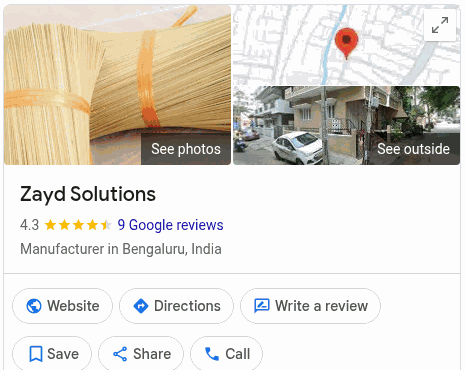
Rated 4.3 / 5 · 9 Google reviews — tap to read them on Google.
Frequently asked questions
What is the minimum order quantity?
Retail packs start at a single carton. Wholesale pricing begins at 10–20 cartons depending on the category, and export orders are quoted per 20ft container.
Do you supply private label?
Yes. We print inner packs, sleeves, boxes and paddle heads with your artwork, and allocate barcodes on request.
What is the typical lead time?
Stocked sizes ship in 5–7 working days. Custom sizes, printed packaging and container loads run 21–30 days from artwork approval.
Which certifications do you hold?
Certification details are being published; we will list each certificate with its issuing body and validity rather than make an unverified claim.
Do you export?
Yes. Share your destination port and preferred incoterm on the bulk enquiry form and we will quote FOB or CIF.
Are the products food safe?
Products in contact with food are made from untreated single-species bamboo with no bleach, wax or coating, and are mechanically polished.
Can you make products we do not see listed?
Yes. Chopping boards, cutlery, straws and tableware are on our roadmap and we take development enquiries now.
How do I get a quote?
Use the bulk enquiry form with product, quantity, destination and timeline. Quotes are issued within one working day.